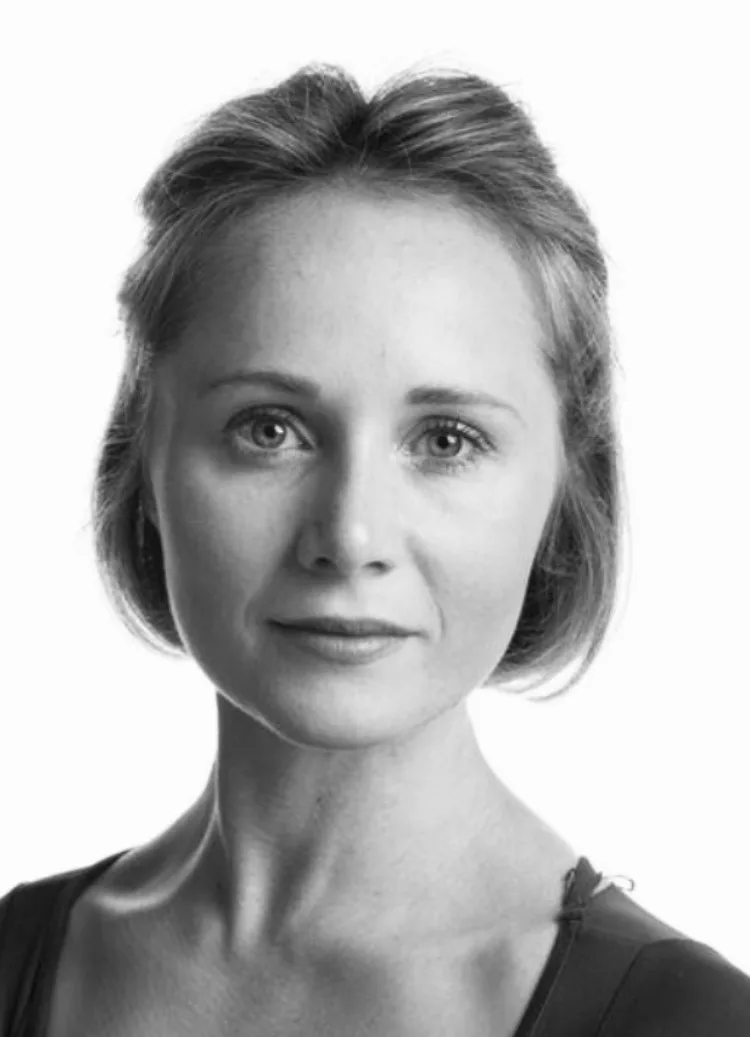
The impact of REDs and disordered eating on fertility
Jenna Roberts
What has been your experience with REDs?
My journey with REDs started when I was 16 and I moved to England from Australia.
On the first day of school they did a weigh-in. I was 45kg and the head of the healthcare team said "I think that's a really great weight for you and you should try and stay at that weight". At that stage I thought this is obviously a really important person, they know what they're doing so I need to really try and stay at that weight. Then I got very, very homesick, and started to put on weight, I also got injured and I got called into the director's office and was told that I needed to lose weight.
I ate less, exercised more, I got injured and I ended up having a stress fracture.
I came back home to Australia and then got better, got healthier, went back over and finished out my final two years at the school. Then I joined Birmingham Royal Ballet where I was for 15 years and reached the rank of principal. My time there was amazing, but I still had in the back of my mind that I needed to stay at this weight of 45kg.
I was trying to keep at that weight, not eating enough, I danced on a stress fracture for two years because I was doing quite well in the company and didn't want to miss out on anything or promotions.
I'd done a very good job of hiding it for two years, taking a lot of painkillers, trying to hide things in class that I couldn't do and then ended up having to have an operation on that foot.
It resulted in two pins in my foot, bone marrow taken from my hip to fill the hole in my foot, a huge operation, and a year of no dancing. During that time, I didn't want to put on weight so I was making myself sick, taking laxatives, it escalated.
After ,there was a period where I knew I needed to stop making myself sick and taking the laxatives. I knew I needed to really get healthy and get strong, but there was never a time where I didn't get through a show, I always had really good stamina, I was always tired but put that down to rehearsing a lot.
It wasn't really until I stopped dancing that I realised how much I was struggling with REDs at the beginning and during the middle as well, before my eating disorder took over and then after as well my eating disorder stopped.
The only question the doctor and physio would ever ask me was "Do you have a period?". I always had my period, I never lost my period during my career and it's always been really regular. So when I would say, yeah, they never dug any further than that. The message was that I was fine, I was just dancing a lot, rehearsing a lot, I was working.
How did language affect you and how would you change those phrases?
There were words used that really triggered me personally and made me think I had to look a certain way. Things like “that is a really great weight for you”, “try and stay at that weight”, “you look amazing in that costume”, “no one else can pull off those costumes like you do”, “you look so thin and you look so beautiful on stage”, “you're so lean and long”.
Now I’m really aware of the language that we use and how triggering it can be for people.
For example I wouldn't do weigh-ins. A lot of places still do the weigh-ins and they do it for health reasons but between the ages of 12 and 18 in particular, they can be deeply triggering for everyone and I don’t believe they’re necessary.
In terms of language, use phrases like “you look so strong and powerful on stage”. Always in the context of performance, endurance, musicality, and artistry, not about their aesthetic side. There's so many other things that could be talked about other than how a dancer looks, whether it be in class or on stage.
With the work you do now, what are the qualities and habits that you try to instil in the dancers you work with today?
I teach Pilates, but I also work for the company Progressing Ballet Technique which is all about the health and prolonging a dancer's career both physically and mentally.
I want to help make dancers aware of triggering words, help them identify who they could go to if they need help and I’m always highlighting the education resources of Project RED-D.
I think it’s important to educate them on what could happen if they don't treat their bodies right and if they don't look after themselves mentally and physically.
Dance in general is a very short career and your life after it is going to be so much longer and you really need to be aware of that.
I just want dancers all to have healthy long careers.
How has REDs and eating disorders affected your fertility?
It wasn’t until I had properly retired from dancing that we began to understand how much REDs and my history with disordered eating may have affected my fertility.
My husband and I started trying for a baby while I was still dancing, but nothing was happening. At the time, we put it down to stress, but when I stopped dancing, we tried again and still nothing happened so we went for some tests.
That’s when we discovered that although I was having regular periods, I wasn’t ovulating. We don’t know how long that had been the case; it may well have been happening during my career. It just shows that having a regular period doesn’t necessarily mean everything is okay.
We did more tests, tried for a long time, and then went down the IVF route.
When they were doing my egg collection during the cycles, doctors found that my egg quality was very low for my age. I was around 36 at the time, not especially young, but not an age where such a decline in egg quality would be expected.
They asked about smoking and drinking, neither applied to me and there was no clear explanation.
Whether REDs and years of underfueling played a role, I can’t say with certainty, but it’s certainly possible. The height of REDs and my eating disorder was in my early to mid-twenties.
We went through four rounds of IVF without success. Eventually, we were asked whether we would consider using an egg donor. We said yes. After our second donor transfer, I became pregnant with our daughter, who is now nearly three. We feel incredibly fortunate to have her.
You think you get pregnant and then everything will be ok if you want to try again, but since I’ve had two miscarriages back-to-back and then we had another transfer and that didn't work and then we did a second transfer and that one didn't work either.
We’re still trying. It’s been 10 years of trying and eight rounds of IVF.
It's a lot and I'm sure that there is an element of connection with REDs and my eating disorder.
I want people to be aware that this does happen, not to everybody, but this is something that could happen in the future if you don't look after yourself.
What do you wish women knew or understood about their fertility from a young age?
I wish I knew more about egg quality and about freezing eggs. I think for a dancer, that could be really important as you could get your eggs frozen at quite a young age. That doesn't necessarily mean that you're going to have kids later on, but you will have the option there, especially if you don't want children while you're dancing.
Also just because you have your period, don't think that everything's fine. Get checked and get your hormones checked regularly. I was 35 when I found out that I wasn't ovulating.
Keep an eye on your hormones, get your bloods done, speak to people if you are thinking about having a family in the future, speak to a doctor about freezing your eggs, and educate yourself on it all.
When you are dancing you don't really think about what you're going to do when you stop dancing or whether you are going to have a family, until it starts to get closer to it. I likely wouldn’t have listened when I was 16, but at least the education would have existed. That’s why we need to talk about it, we need to share stories and explain that this could happen.
When you look at dance culture in general, what do you feel needs to change in order to help more dancers fuel correctly?
It needs to come from the top because otherwise dancers are just going to constantly think, this is what I need to look like to be able to get there.
There is the expectation for a dancer to look a certain way, and when they don't look a certain way, there is a question of whether they are out of shape, so we also need to tackle the expectation of what a dancer should look like.
It's hard to say what the directors of schools are thinking, but I think dance in general is stuck in tradition with an old school mentality, and they don't want to change it.
What advice would you give to dancers about managing their fuelling and preventing REDs?
If you aren't feeling like yourself, then please go and ask for help. Don't try and do it on your own. There are people out there that are educated, that understand and know about nutrition.
Also, just because you're eating enough, it doesn't mean that you're going to be putting on loads of weight, you need to be educated and go and talk to people.
Especially if you feel like you can't go to your management, go to your teachers, if you can't go to your teachers and if you can't go to your peers, then please try and source support outside. It can have a huge effect, not just in your dancing career, but afterwards as well.